How WebAR Increases Ecommerce Conversions


How WebAR Increases Ecommerce Conversions
One of the biggest problems in ecommerce is simple:
Customers cannot truly experience products before buying them.
They can look at images, read descriptions, and watch videos, but they still cannot answer important questions like:
- How big is this product really?
- Will it fit in my room?
- Does it look good in my space?
Because of this uncertainty, many customers hesitate to buy.
In fact:
- Nearly 70% of online shopping carts are abandoned
- Around 22% of product returns happen because items look different in real life
This is where WebAR (Web-based Augmented Reality) is changing ecommerce.
What is WebAR?
WebAR allows customers to view products in Augmented Reality directly from their browser without installing an app.
A customer simply:
- Opens a product page
- Taps “View in AR”
- The product appears in their real environment through their phone camera
For example:
A customer shopping for a chair can instantly place the chair inside their living room and see exactly how it looks and fits.
This dramatically improves buying confidence.
The Psychology Behind AR Shopping
Customers are far more likely to purchase a product when they feel confident about it.
Traditional ecommerce pages rely on:
- static images
- product descriptions
- measurements
But AR provides something much closer to a real store experience.
When customers can place a product in their environment, they:
- understand its size
- see how it fits with their surroundings
- feel emotionally connected to the product
This reduces hesitation and increases purchase intent.
Real Statistics Showing AR's Impact on Ecommerce
Multiple studies show how powerful AR can be for online shopping.
Shopify reported:
- Products with AR experiences showed up to 94% higher conversion rates
Google research suggests:
- AR product experiences can increase customer engagement by over 200%
Snapchat and Deloitte found:
- 66% of consumers are interested in using AR for shopping
- 40% are willing to pay more for products experienced through AR
These numbers clearly show that interactive product experiences drive more purchases.
WebAR vs App-Based AR
Many companies first introduced AR through mobile apps, but this created a major barrier.
Let’s compare both approaches.
App-Based AR
Pros
- High graphical performance
- Advanced features
- Offline capabilities
Cons
- Requires downloading a mobile app
- Large file sizes (often 100MB+)
- Higher development and maintenance costs
- Many users abandon the process before trying AR
Typical user journey:
- Visit website
- Download app
- Install app
- Sign up
- Finally use AR
Most users never reach the final step.
WebAR
Pros
- No app download required
- Works instantly in a browser
- Easy to access from links, ads, or QR codes
- Much higher user adoption
Cons
- Slightly fewer advanced features than native apps
Typical user journey:
- Tap View in AR
That’s it.
Because there is almost zero friction, many more users actually try the AR experience.
Why WebAR Leads to Higher Conversions
In ecommerce, every extra step reduces sales.
WebAR eliminates the biggest barrier: app installation.
This results in:
- more users interacting with products
- longer time spent on product pages
- higher customer confidence
- more completed purchases
Simply put, WebAR increases engagement and trust, which directly improves conversion rates.
How ARViewer Makes WebAR Easy for Ecommerce
While AR technology can sound complex, platforms like ARViewer make it simple for businesses to implement.
ARViewer allows ecommerce brands to generate 3D models, launch WebAR experiences, and share them easily with customers.
1. Automatic 3D Model Generation
Many ecommerce businesses do not have 3D models of their products.
ARViewer solves this problem by allowing brands to generate optimized 3D models automatically.
This means businesses can quickly convert their products into AR-ready 3D experiences without needing complex 3D pipelines.
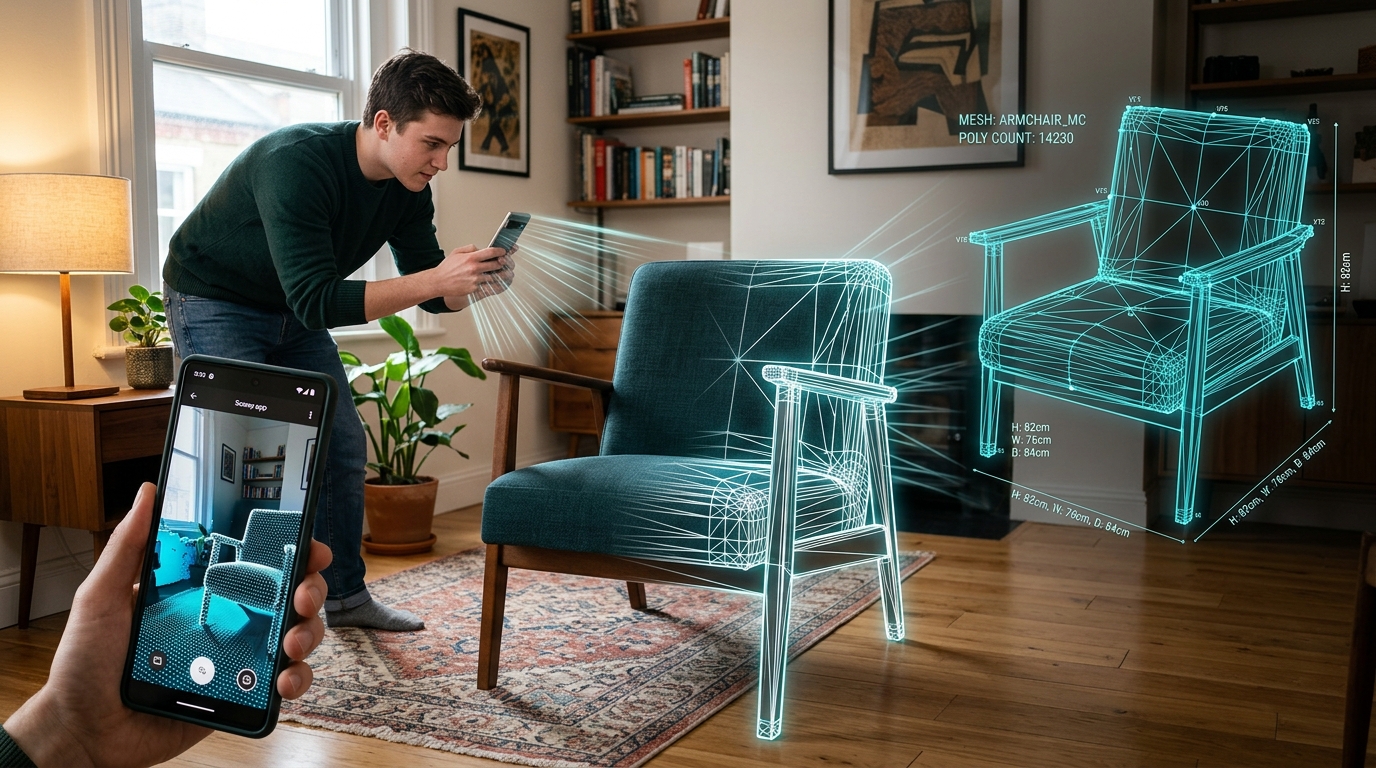
2. Instant WebAR Experiences
Once a 3D model is ready, ARViewer allows it to be launched instantly in WebAR.
Customers can open the AR experience directly in their mobile browser and place the product in their environment.
No app downloads.
No complicated setup.

3. QR Codes for In-Store and Online Experiences
ARViewer also generates QR codes for every AR experience.
Businesses can place these QR codes:
- on product packaging
- inside retail stores
- on product pages
- in advertisements
- in catalogs
Customers simply scan the QR code with their phone and the AR experience opens instantly.
This creates a seamless bridge between physical products and digital experiences.

Industries Already Using WebAR
WebAR is quickly becoming popular in many ecommerce categories.
Furniture
Customers can place sofas, tables, and decor items inside their homes before purchasing.
Fashion & Accessories
AR enables virtual try-ons for:
- sunglasses
- watches
- sneakers
- jewelry
Electronics
Customers can preview the real size of devices like:
- TVs
- monitors
- speakers
before buying them.
AR Also Reduces Product Returns
Product returns are one of the largest costs in ecommerce.
When customers cannot properly judge size or appearance, they often return products.
AR helps customers make more informed decisions before purchasing.
Research suggests that AR visualization can reduce product return rates by up to 25–40%.
This means:
- fewer refunds
- lower shipping costs
- happier customers
The Future of Ecommerce is Interactive
Ecommerce is evolving rapidly.
In the past, product pages contained only:
- images
- text descriptions
Today they include:
- videos
- 3D product viewers
- AR experiences
Soon, interactive product visualization will become a standard expectation.
Just like high-quality product photos became essential, AR experiences will become a normal part of online shopping.
Final Thoughts
WebAR is more than just a new technology — it is a powerful tool for increasing ecommerce conversions.
By allowing customers to interact with products in real environments, WebAR:
- increases confidence
- boosts engagement
- reduces product returns
- and ultimately drives more sales
Platforms like ARViewer make it easy for businesses to adopt this technology by handling:
- 3D model generation
- WebAR deployment
- QR code sharing for instant access
As ecommerce continues to evolve, brands that embrace interactive shopping experiences will stand out and convert more customers.